
One room, four jobs: bedroom, living room, dining room and office, often with the kitchen in plain view. The fix isn’t more furniture. It’s giving each job its own small, clearly marked spot.
These studio apartment decor ideas show you how to split a single room into zones with rugs, lamps, shelving and furniture that works twice, on a renter’s budget. Each idea has a cost tier and a straight answer on whether it’s rental-safe, and thirteen of the fifteen work without drilling.
We start with the layout, then the zones, the furniture that does double duty and the storage that goes up instead of out. A spacing cheat sheet sits near the end.
Quick take
- Biggest change for the least money: give every zone its own lamp (#5).
- Renter-safe picks that need no tools: #1, #4, #5, #6, #9, #11 and #15.
- Plan before you buy: tape the layout on the floor and keep the main path 30 to 36 inches wide (#1, #2).
- Tall shelves and bookcase dividers should be anchored, so ask your landlord before you drill (#7, #14).
Plan the Layout Before You Buy
1. Tape Out the Floor Plan First

Most studio mistakes are buying mistakes: a sofa that blocks the closet, or a table that leaves no room to pull out a chair. Ten minutes with a tape measure prevents both.
Measure the room, the doors and windows, and note where the outlets and radiators sit. Then mark each piece you own or plan to buy on the floor with painter’s tape, at full size. Live with the outline for a day and walk your usual routes: door to kitchen, bed to bathroom, sofa to closet.
Cost: Free · Renter-friendly: Yes
Small-space trick: photograph the room from the doorway with the tape down. A picture shows crowding you won’t notice while standing in it.
2. Keep One Clear Walkway
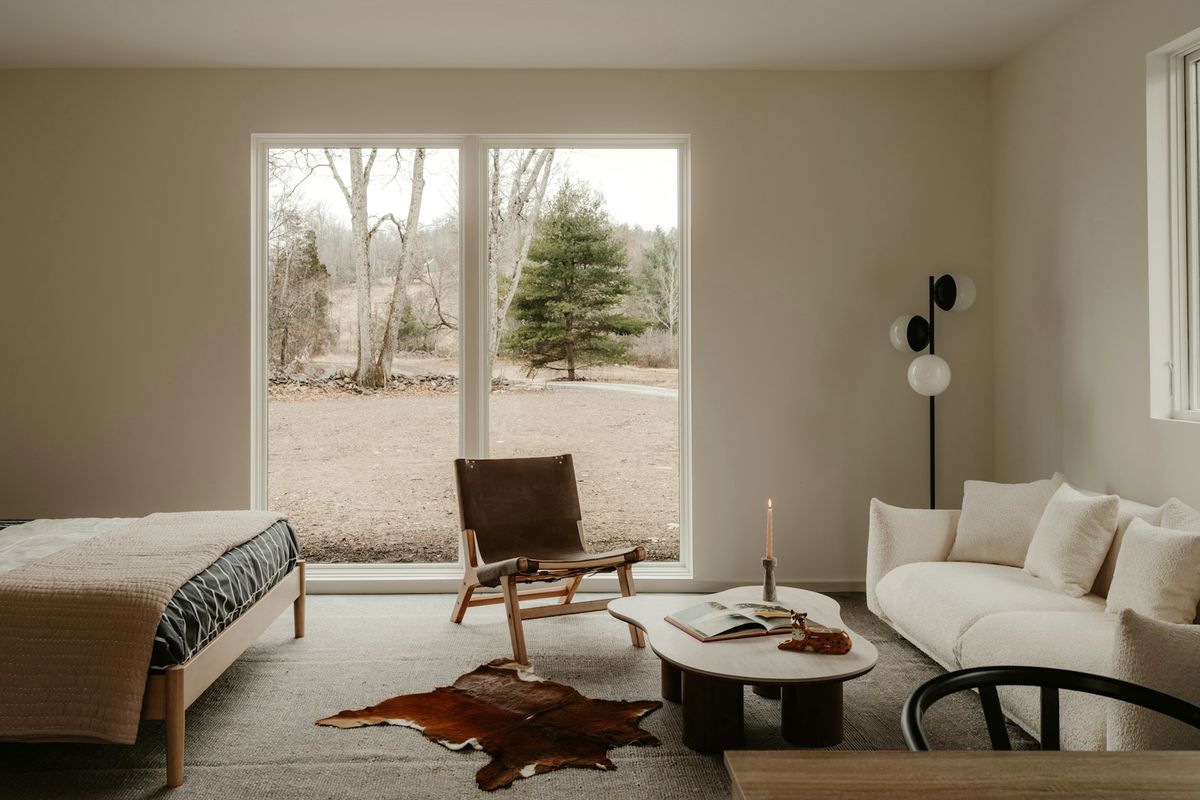
A studio feels roomy or cramped mostly because of how easily you move through it. One clean path from the door through the room makes everything else look organized.
Designers quoted in a Homes & Gardens spacing guide suggest about 30 to 36 inches between large pieces of furniture, and say 24 inches is the tightest that still feels comfortable. Keep your main route at the wider end and let side paths be narrower.
Cost: Free · Renter-friendly: Yes
Good to know: doors and drawers need room too. Open the closet, the fridge and every drawer to make sure nothing blocks them.
3. Give the Bed the Quiet Corner

The bed is the biggest piece in a studio and the most private one. Placed in the corner farthest from the front door, it stops being the first thing guests see.
Look for a corner out of the direct line from the entry, ideally near a window for morning light. Push the bed’s long side against the wall to save floor space, and keep a small surface beside it for a lamp and a glass of water. The rest of the room then reads as living space.
Cost: Free · Renter-friendly: Yes
Renter tip: check where the radiator or heating vent sits before you commit, and keep bedding and curtains clear of it.
Make Separate Zones in One Room
4. Give Each Zone Its Own Rug

Rugs are the cheapest walls you can buy. One under the bed and another under the seating tell the eye where one “room” ends and the next begins.
Under the seating, designers quoted by Homes & Gardens say the rug should fit at least the sofa’s front legs, and the same publication suggests leaving 12 to 18 inches of bare floor before the walls. Pick rugs that share one color but differ in pattern, so the zones feel related.
Cost: $$ to $$$ · Renter-friendly: Yes
Budget tip: a bed rug only needs to show at the sides and foot. Two runners along the sides often cost less than one large rug.
5. Light Each Zone Separately

One ceiling light turns a studio into one big bright box. A lamp in each zone lets you light only the part you’re using, so the bed can sit in shadow while you read on the sofa.
Give the bed a bedside lamp, the seating a floor lamp and the table or desk a small task lamp. Choose warm bulbs: the U.S. Department of Energy notes that warm light sits around 2,700K, and the number is printed on the Lighting Facts label.
Cost: $ to $$ · Renter-friendly: Yes, plug-in only
Pro tip: vary the heights: low by the bed, middle at the table, tall by the sofa. Layered light makes a small room look deeper.
6. Turn the Sofa Into a Wall
Pulling the sofa off the wall and turning its back toward the bed creates a natural divide. The low back separates the two zones without blocking light or making the room darker.
Float the sofa so it faces away from the bed, then set a narrow console, a low bookcase or a row of baskets against its back. That surface holds a lamp and catches the clutter that would otherwise land on the bed. Keep at least one end open for the walkway.
Cost: Free if you already own a sofa · Renter-friendly: Yes
Best for: long, rectangular studios with the bed at one end and the entry at the other.
7. Divide With an Open Bookcase

An open shelving unit splits the room while letting light through. It also adds storage on both sides, which a curtain or folding screen can’t do.
Choose a unit with an open back, set it at a right angle to the wall and keep heavy items on the lowest shelves. CPSC urges anchoring bookcases to the wall and notes that most anti-tip kits cost less than $20 and install in under 20 minutes.
Cost: $$ · Renter-friendly: Ask your landlord, since anchoring needs a screw. The Anchor It! site has tips for filling the holes when you move out.
Skip it if: you can’t anchor it. A low, wide shelf is far more stable than a tall, narrow one standing free.
8. Hang a Curtain Around the Bed
Fabric is the softest divider there is. A curtain that pulls closed at night turns a bed corner into a real bedroom, then opens up again in the morning.
The no-drill version is a heavy-duty tension rod across an alcove or nook, with lightweight panels. In an open room, a ceiling track looks cleanest but needs screws. Choose a light, warm fabric so the room doesn’t shrink, and hang it as high as you can.
Cost: $ to $$ · Renter-friendly: Yes with a tension rod in an alcove; Ask your landlord about a ceiling track
DIY it: two flat sheets on clip rings make an inexpensive curtain. Match them to your bedding so the bed corner looks planned.
Furniture That Does Two Jobs
9. Choose a Daybed or Sleeper Sofa
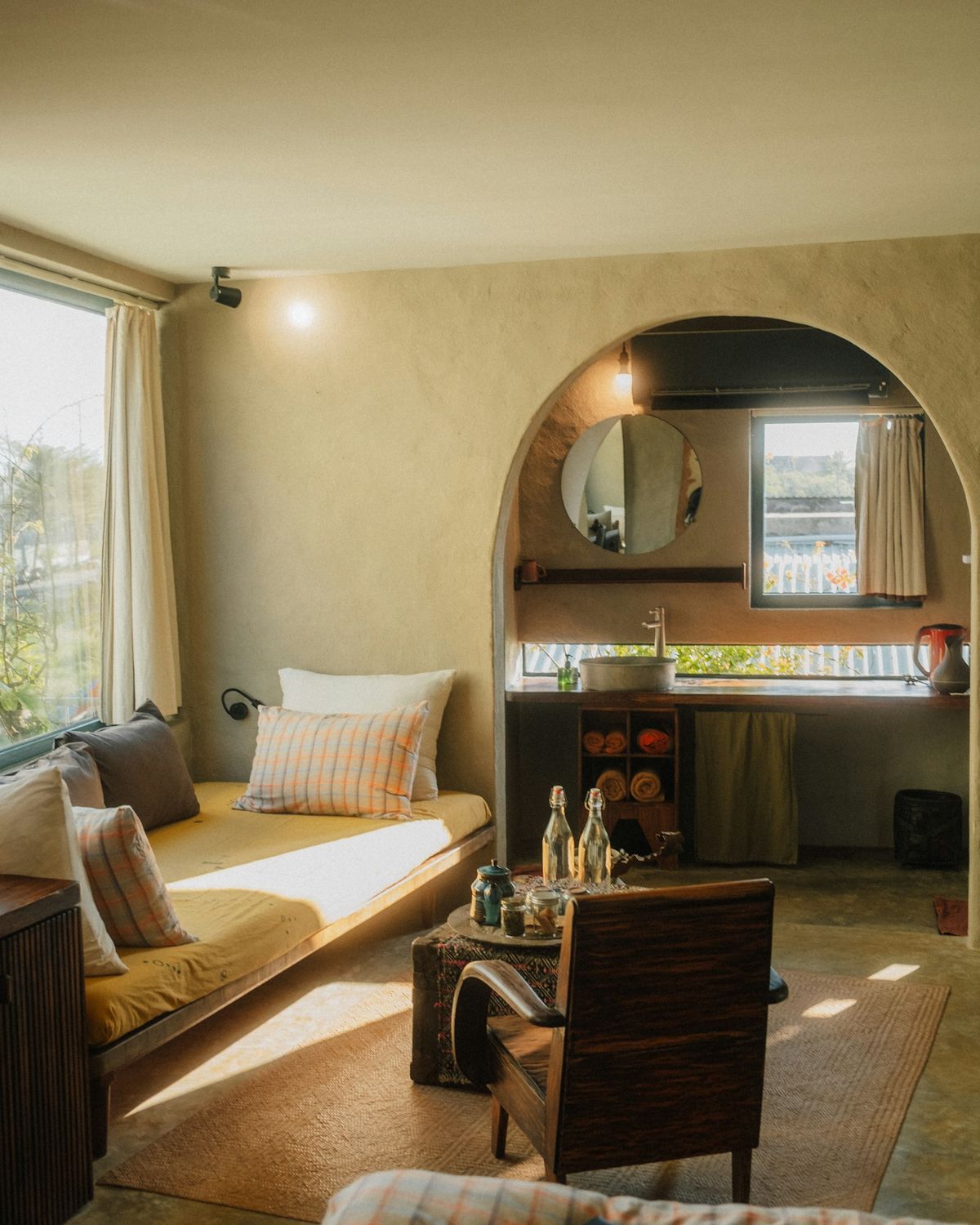
If the room can’t fit both a bed and a sofa, a daybed or sleeper sofa gives you one piece for both jobs. Piled with pillows, it reads as seating during the day.
A daybed looks like a sofa with a mattress inside its frame; a sleeper sofa or futon unfolds into a bed. Measure the opened size, not just the closed one, and tape it out. Keep bedding in a lidded basket or drawer nearby so the switch takes a minute.
Cost: $$ to $$$ · Renter-friendly: Yes
Good to know: if you’ll sleep on it every night, check the return window before buying, since comfort is hard to judge online.
10. Pick a Small Round Table That Works Twice

In a studio the dining table is also the desk, the hobby table and the place where mail lands. A round table has no corners to bump into, so it fits tighter paths than a rectangle.
Set a small round table for two near the kitchen or a window. Pick chairs light enough to move with one hand, and keep a basket under the table for your laptop and work things, so dinner starts with a clear top.
Cost: $$ · Renter-friendly: Yes
Small-space trick: a pedestal base has no corner legs, so chairs tuck in all the way around.
11. Put Storage at the Foot of the Bed
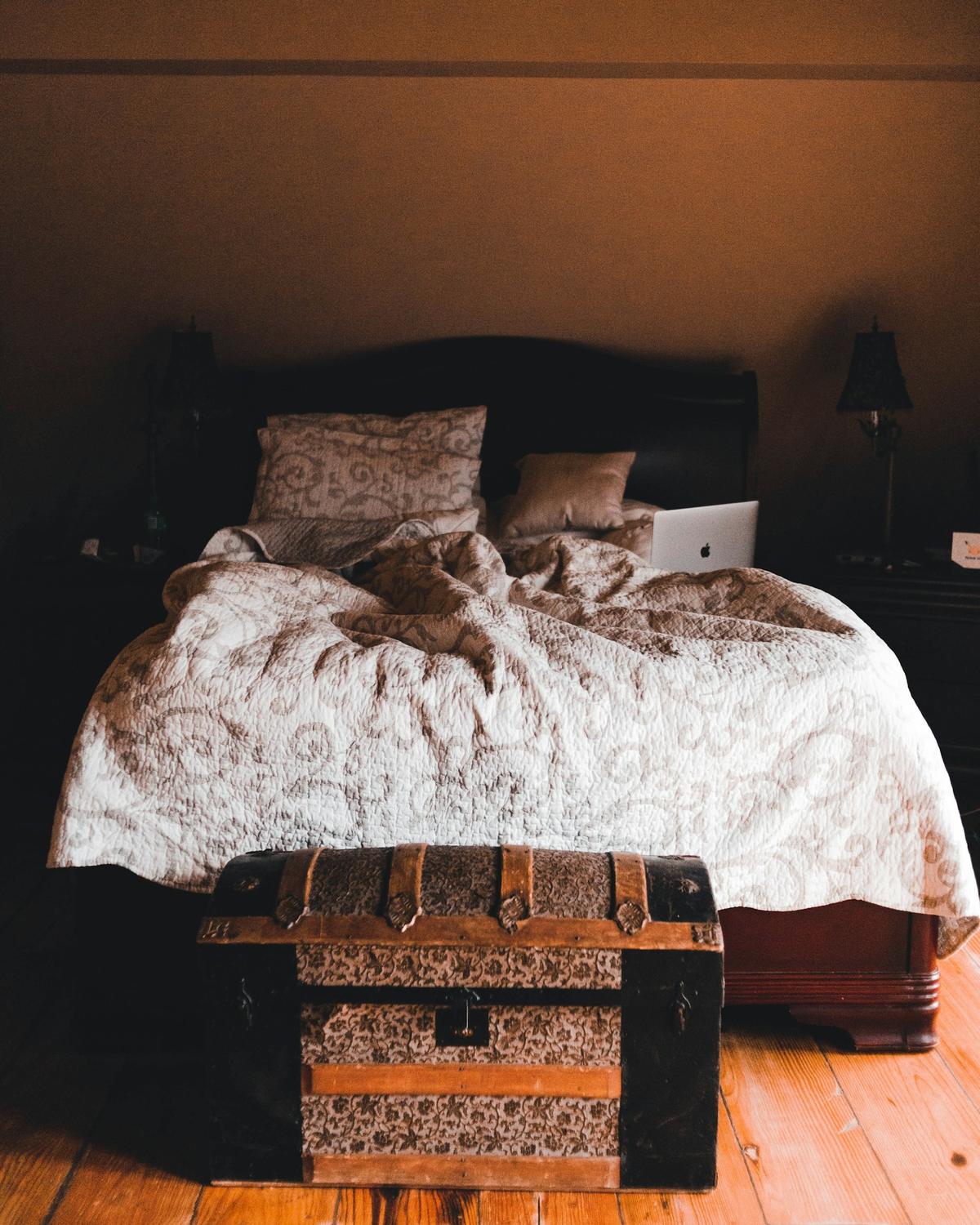
The floor at the foot of the bed is usually wasted. A trunk or storage bench there holds spare blankets and gives you a place to sit and put on shoes.
Measure the gap between the bed and the walkway first; the bench should leave the path clear. A lidded trunk, a storage ottoman or a bench with baskets underneath all work. Secondhand trunks are common and add character to a plain room.
Cost: $ to $$ · Renter-friendly: Yes
Skip it if: the foot of the bed faces the main walkway. A bench there only narrows the path, so use under-bed storage (#15) instead.
12. Tuck a Slim Desk Beside the Bed
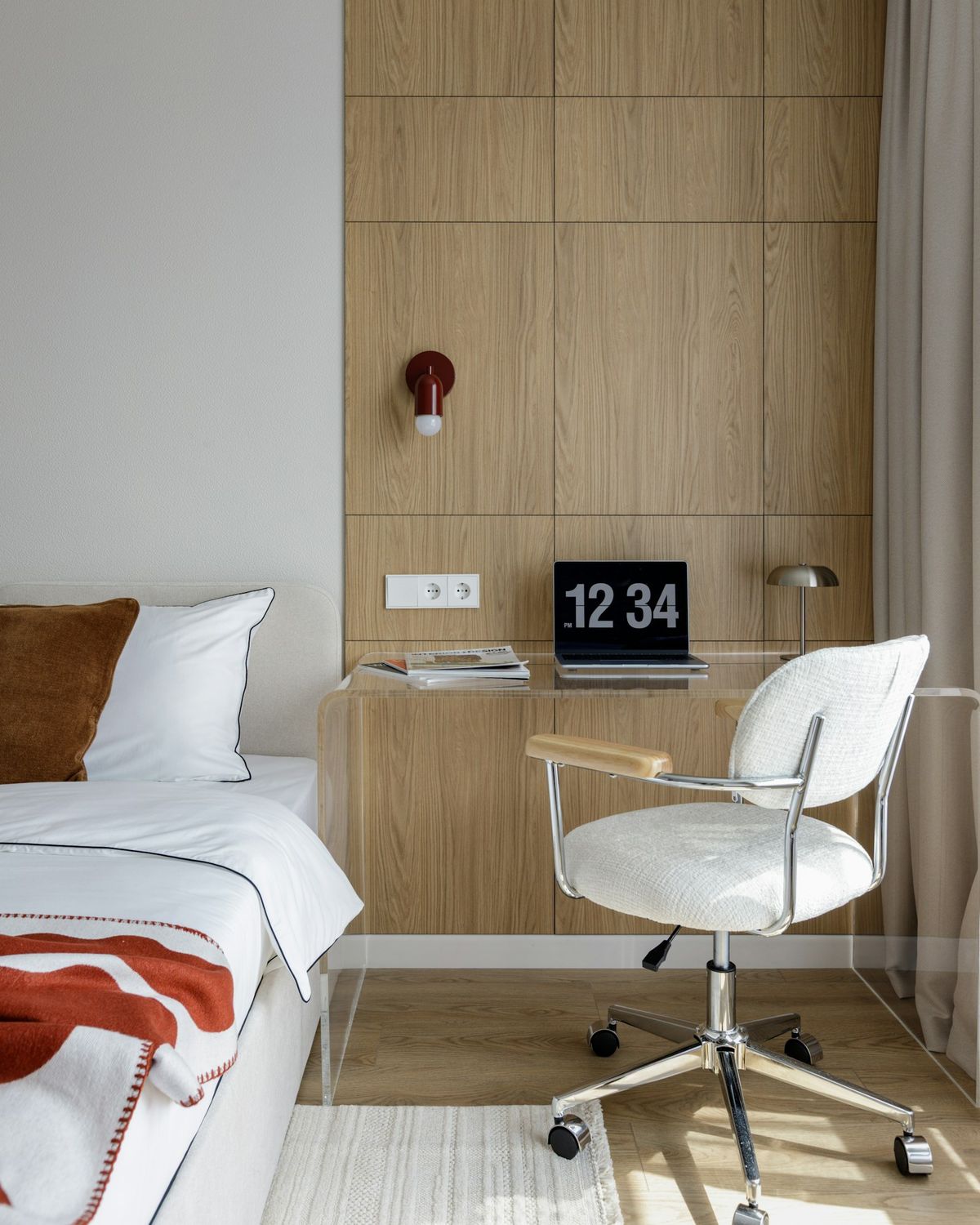
Working from a studio means the office needs its own spot, even if it’s only a few feet wide. A slim desk beside the bed also doubles as a nightstand.
Look for a narrow desk or console table with a chair that tucks fully underneath, and give it a task lamp. At the end of the workday, put the laptop in a drawer or basket so the bed side feels restful again.
Cost: $$ · Renter-friendly: Yes
Best for: people who work from home a few days a week and want one quiet corner for both sleep and work.
13. Scale the Furniture Down
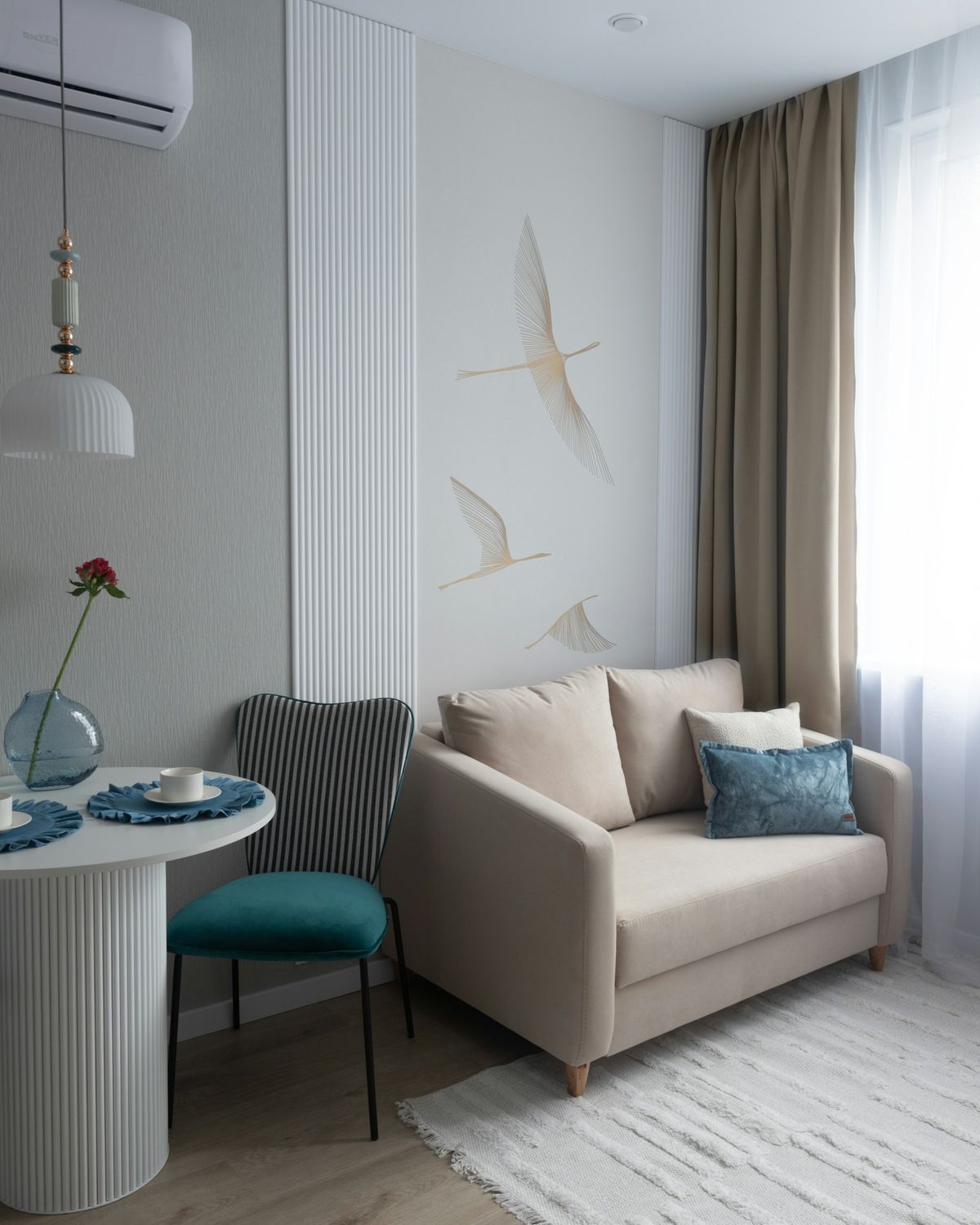
Full-size living room furniture swallows a studio. A loveseat instead of a three-seat sofa, or armless chairs instead of club chairs, leaves more floor visible, and visible floor reads as space.
Choose pieces on legs so you can see under them, with slim arms and light colors. Check depth as well as width: a deep sofa can eat a walkway even when its length fits. Our apartment decorating on a budget guide covers buying these pieces secondhand.
Cost: $$ to $$$ · Renter-friendly: Yes
Pro tip: sit on a loveseat before you buy it. Seat depth varies a lot, and a shallow one can feel cramped.
Go Up, Not Out
14. Go Tall With Narrow Shelves

Wall space is the one thing a studio has plenty of. Tall, narrow shelving holds books, plants and baskets on a small footprint and draws the eye up.
A ladder shelf or slim bookcase fits beside a window or at the end of the sofa. Keep heavy things on the lowest shelves, as CPSC advises, and light decor up top. Tall shelving is exactly the kind of furniture the agency asks people to anchor to the wall.
Cost: $ to $$ · Renter-friendly: Ask your landlord, since anchoring needs a small screw
Renter tip: keep the anchor hardware and a small tub of spackle in one bag, ready for move-out day.
15. Use the Space Under the Bed

Under the bed is the biggest hidden storage space in a studio. It keeps off-season clothes, spare bedding and luggage out of sight.
Measure the clearance, then choose flat lidded bins or rolling drawers that fit. If your frame sits low, bed risers lift it a few inches. A bed skirt or long coverlet hides everything, so the bed still looks calm when guests come over.
Cost: $ · Renter-friendly: Yes
Budget tip: risers are among the cheapest storage upgrades there are. Check the weight rating and make sure they sit flat on your floor.
Studio Apartment Decor Cheat Sheet: Spacing That Works
| What | Rule of thumb | Source |
|---|---|---|
| Path between large pieces | 30–36 inches; about 24 inches at the tightest | Homes & Gardens |
| Sofa to coffee table | About 14–18 inches | Homes & Gardens |
| Rug to walls | 12–18 inches of bare floor | Homes & Gardens |
| Rug under seating | At least the sofa’s front legs on the rug | Homes & Gardens |
| Warm bulb color | Around 2,700K (on the Lighting Facts label) | U.S. Department of Energy |
| Anti-tip kit for tall shelves | Most cost under $20 and install in under 20 minutes | CPSC |
Start Here: 3 Ideas for Any Budget
- Free: tape out the floor plan (#1). It costs nothing and stops the most expensive mistake, buying furniture that doesn’t fit.
- Under $50: a lamp for every zone (#5). Basic or thrifted lamps with warm bulbs split the room into spaces after dark.
- Under $150: a rug for the seating area (#4). It marks the living room faster than any other single purchase.
FAQ
How do I make a studio apartment feel like separate rooms?
Use zones. Give each area its own rug and lamp, put a sofa or open bookcase between the bed and the living space, and keep one clear walkway through the room. A curtain around the bed adds privacy without walls.
Where should the bed go in a studio apartment?
In the corner farthest from the front door, ideally near a window. That keeps the most private piece out of the first view from the entry and leaves the area by the door for living and dining.
How can I divide a studio apartment without drilling?
Float the sofa with its back to the bed, hang a curtain on a tension rod across an alcove, or use rugs and lamps to mark each zone. A tall bookcase divider should be anchored, so ask your landlord first.
Can I anchor furniture to the wall in a rental?
Ask your landlord first. CPSC recommends anchoring bookcases and dressers to prevent tip-overs, and the holes the anchors leave are small and easy to fill when you move out.
How much does it cost to decorate a studio apartment?
It can start at zero, since planning the layout costs nothing. Lamps, bulbs and storage bins are mostly in the $ tier (under $25), while a rug, a daybed or a bookcase are the bigger $$ to $$$ buys to spread over a few months.

