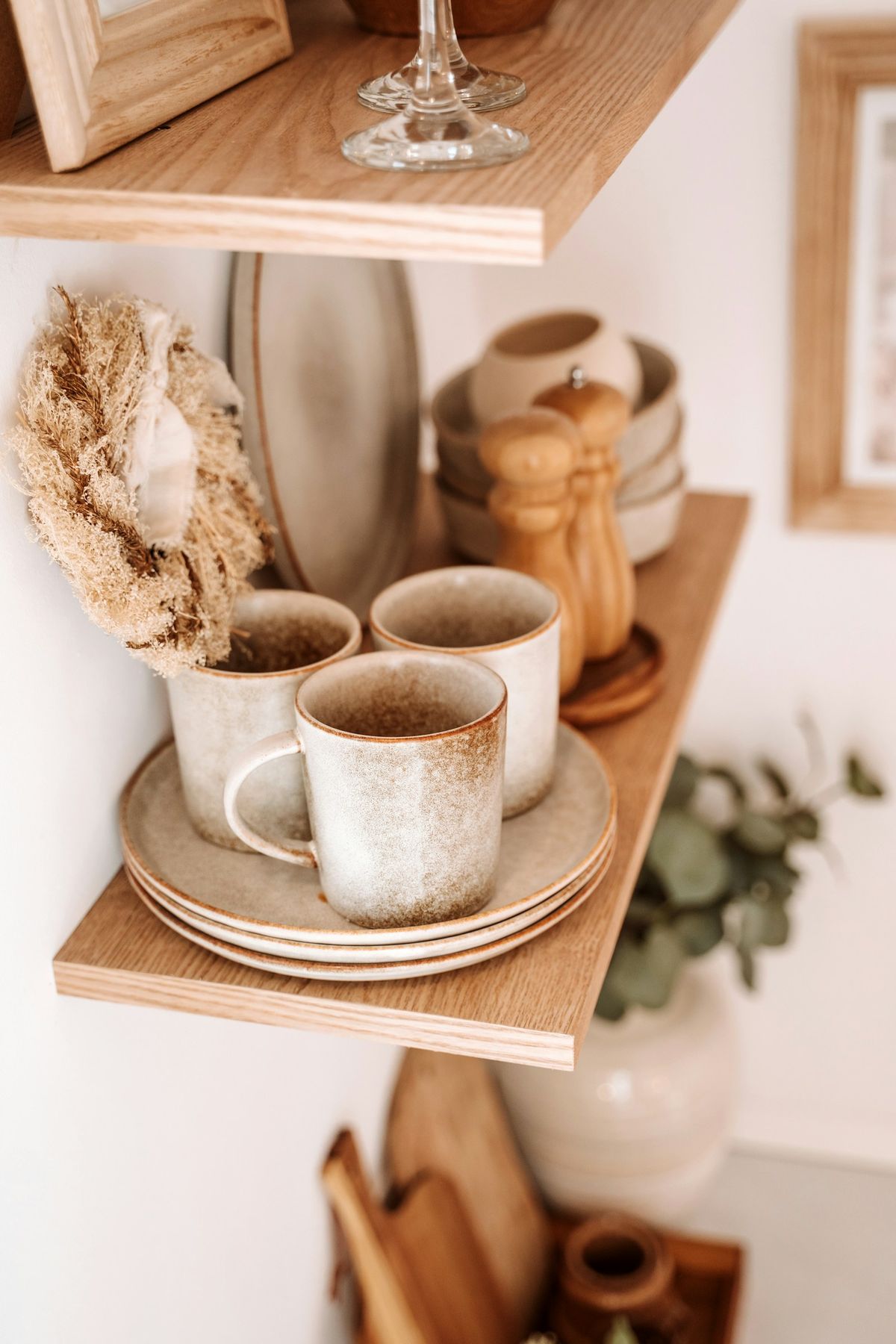
A coffee bar sounds like a big-kitchen luxury until you notice how much of your morning happens in one square foot: the mug, the kettle, the jar of beans and the spoon you can never find.
Give those things one home and the whole kitchen feels calmer. These coffee bar ideas for small spaces fit a counter corner, a rolling cart, a narrow console or even the inside of a cabinet. Each one has a cost tier and a straight renter answer, and 12 of the 14 need no drilling.
We grouped them by goal, then added a quick size and safety guide, because brewers and kettles come with real outlet rules.
Quick take
- Biggest change for the least money: pick one counter corner and put the daily gear on a single tray (#1 and #9).
- Renter-safe picks that need no drilling: #1, #2, #3, #5, #7 (slide-on hooks), #8, #9, #10, #11, #12, #13 and #14.
- Safety first: plug only one heat-producing appliance into a wall outlet at a time, and no extension cords for the brewer or kettle (#11).
- Fresher coffee: an opaque, airtight canister kept away from the oven and afternoon sun (#10).
Choose a Spot That Fits Your Space
1. Claim One Counter Corner

A corner is awkward for chopping, but it’s ideal for coffee. It sits out of the main prep path, and there’s usually an outlet nearby.
Pick the corner closest to an outlet and, ideally, the sink, since you’ll fill the kettle every day. Measure under your upper cabinets before you buy a new machine. Bob Vila’s cabinet guide puts the standard gap at 18 inches, but older rentals vary, and a brewer with a flip-up lid needs room to open.
Cost: Free · Renter-friendly: Yes
Small-space trick: move the toaster and knife block elsewhere. One job per corner keeps the station from becoming a catch-all.
2. Roll a Cart Into an Unused Gap
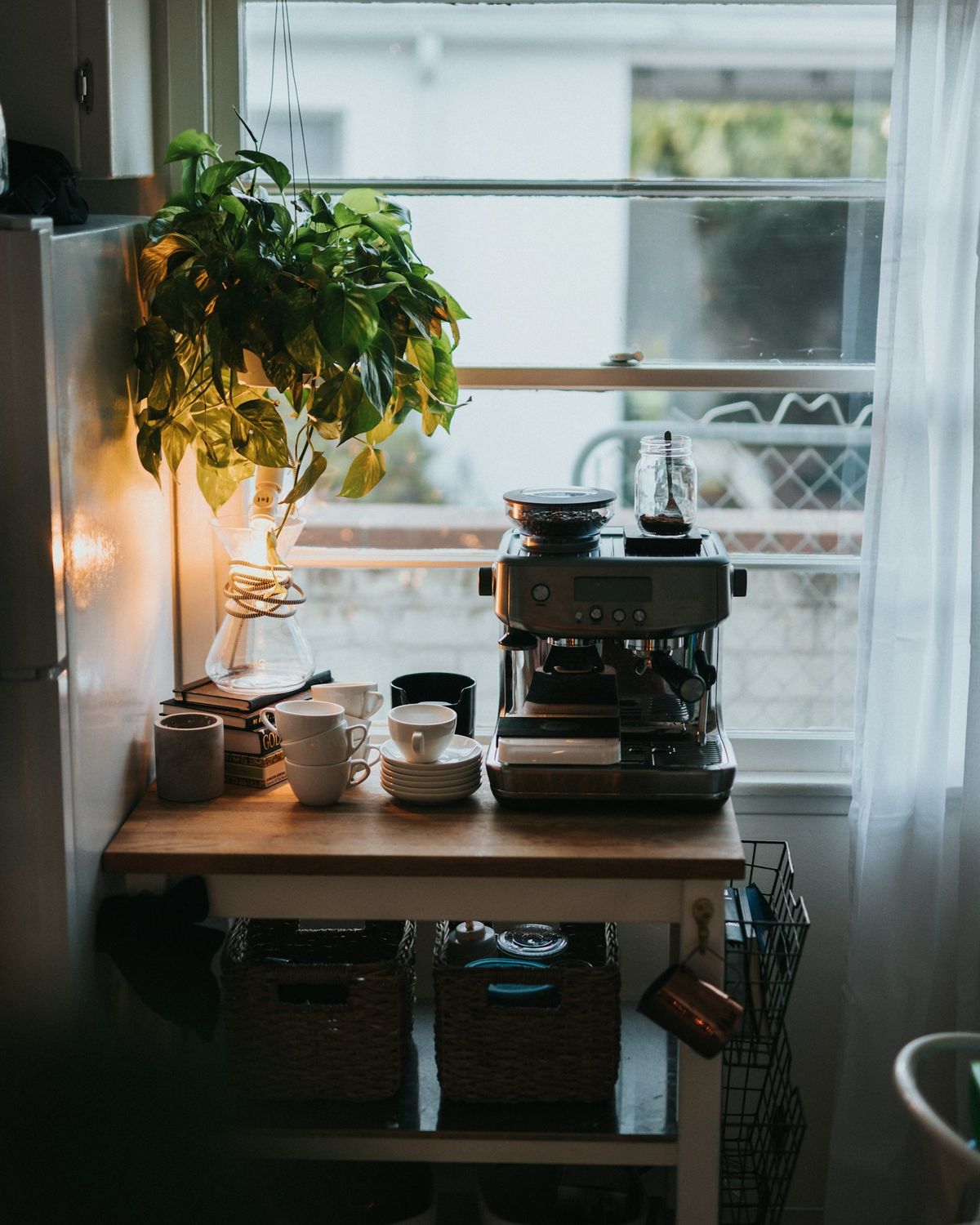
A cart turns a sliver of floor beside the fridge or under a window into a full coffee station with storage below. When you move, it moves with you.
Measure the gap, then look for a solid top shelf for the machine and lower shelves for baskets of filters and spare mugs. Compare the cart’s weight limit per shelf with your machine’s weight, listed on the box or in the manual. Lock the casters, and park it where the cord reaches the outlet without crossing a walkway.
Cost: $$ · Renter-friendly: Yes
Budget tip: a plain metal utility cart works as well as a pricey bar cart. A wood cutting board on top warms it up.
3. Turn a Narrow Console Into a Coffee Station
No spare counter in the kitchen? Look outside it. A slim console in the living area can hold a kettle, a pour-over and two mugs, which leaves the kitchen counter free for cooking.
Use one you own or a narrow secondhand piece, set close to an outlet. Protect the top: one coffee maker’s manual asks for coasters or place mats under the machine, since the furniture finish can otherwise darken or stain. A lidded basket below holds beans and filters.
Cost: Free (if you own one) to $$ · Renter-friendly: Yes
Skip it if: the only free outlet means running a cord behind the sofa or under a rug.
4. Add One Shelf Above It
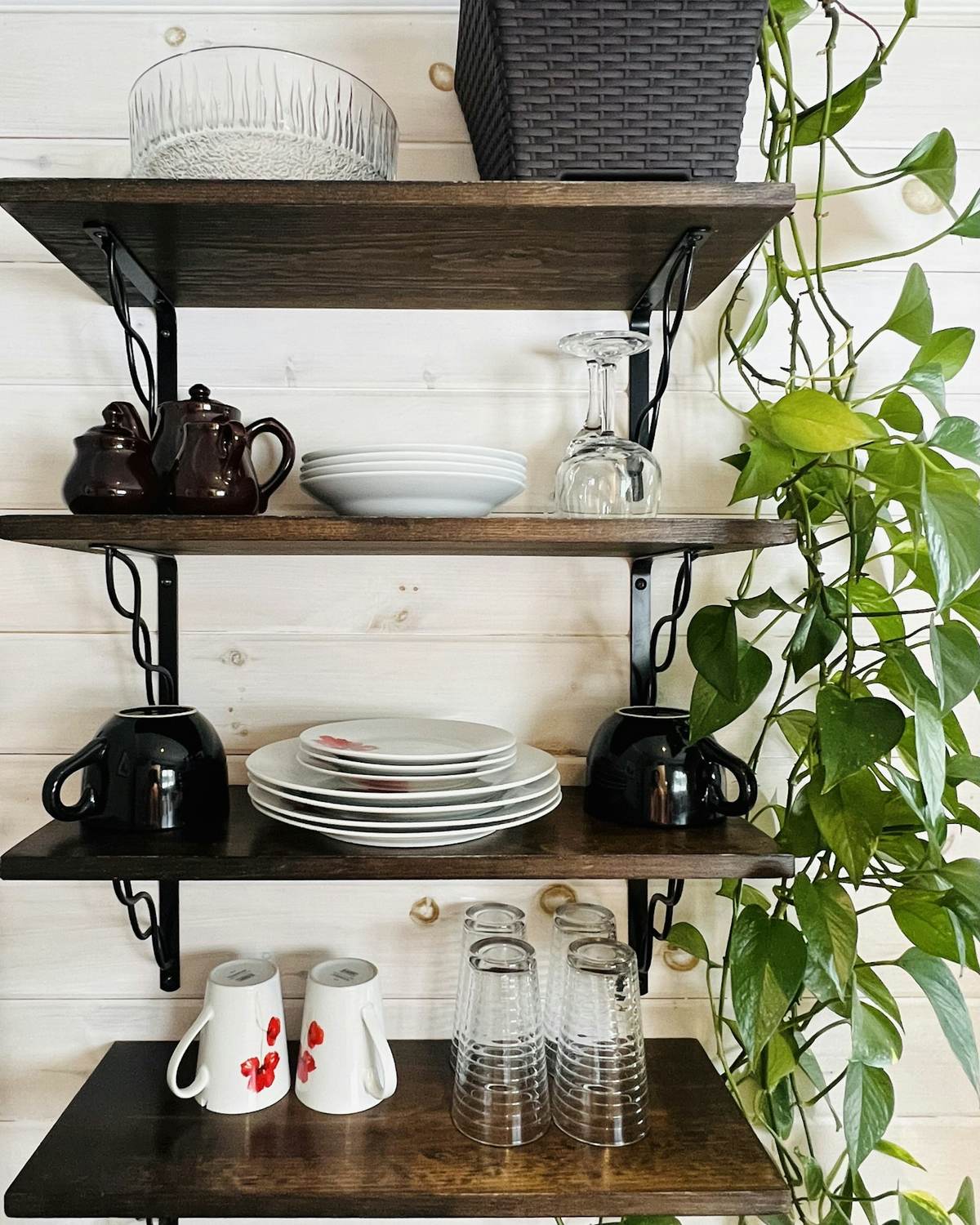
Going up doubles a tiny station without taking more counter. One shelf holds mugs, the sugar jar and a small plant.
Wall shelves are most stable mounted into studs or with anchors rated for the load. Put the shelf to one side of the brewer, above the mugs and canisters, rather than right over the machine, so steam has open air (more on that in #5). Leave room for your tallest mug plus a hand.
Cost: $ to $$ · Renter-friendly: Ask your landlord, since brackets need screws. A freestanding countertop shelf or two-tier riser adds height with no holes.
Renter tip: get the OK in writing, and keep a little spackle to fill the screw holes at move-out.
5. Hide the Station Inside a Cabinet
If you’d rather not see coffee gear at all, give it one cabinet. The doors close on the clutter, and the counter looks calm when guests come over.
Clear a cabinet near an outlet for beans, filters, mugs and the kettle, then pull the machine onto the counter to brew. Don’t run it inside the cabinet or under one: another drip coffee maker’s manual says to use it in a well-ventilated area, never under a cabinet, and the manual in #3 says the same.
Cost: Free · Renter-friendly: Yes
Good to know: a small turntable inside the cabinet brings the back corner within reach.
Mug Storage That Doubles as Decor
6. Show Off a Few Mugs on a Narrow Ledge

Mugs are the most decorative thing on a coffee bar. Three or four favorites in a row look like a collection; twelve crammed in a cabinet look like a chore.
Display the mugs you actually reach for and store the rest. A picture ledge with a small front lip keeps them from sliding. Mount it where you can reach without leaning over a hot kettle, and group mugs by color or glaze for a calmer look.
Cost: $ · Renter-friendly: Ask your landlord, since a ledge needs screws. No permission? Line them up on a riser at the back of the counter.
DIY it: paint an inexpensive pine ledge the wall color, so the mugs seem to float.
7. Hang Mugs From Hooks or a Rail

Hanging mugs frees a whole shelf, and a row of handles adds color at eye level.
Under-shelf mug hooks slide onto an existing shelf or cabinet bottom with no tools. A rail with S-hooks, like the one in the photo, holds a full row but needs screws. A countertop mug tree needs nothing at all. Space the mugs slightly apart so they don’t knock together.
Cost: $ · Renter-friendly: Yes, with slide-on hooks or a mug tree. A screwed-in rail needs your landlord’s OK.
Pro tip: trying adhesive hooks? Check the weight rating on the package first. A ceramic mug is heavier than it looks.
8. Lean a Pegboard Behind the Station
A pegboard turns a blank backsplash into storage you can rearrange: mugs on pegs, a tiny shelf for sugar, a hook for the milk frother.
Lean a small framed pegboard against the wall at the back of the counter or cart, or stand it on a console. The frame holds the board off the wall, so pegs have room to slot in. Load it lightly with mugs and small tools, and keep heavy items like the grinder on the counter.
Cost: $ to $$ · Renter-friendly: Yes, when it leans or stands
Best for: people who like to change things up. Pegs move in seconds.
Trays, Canisters and Fresh Coffee
9. Corral the Daily Gear on One Tray
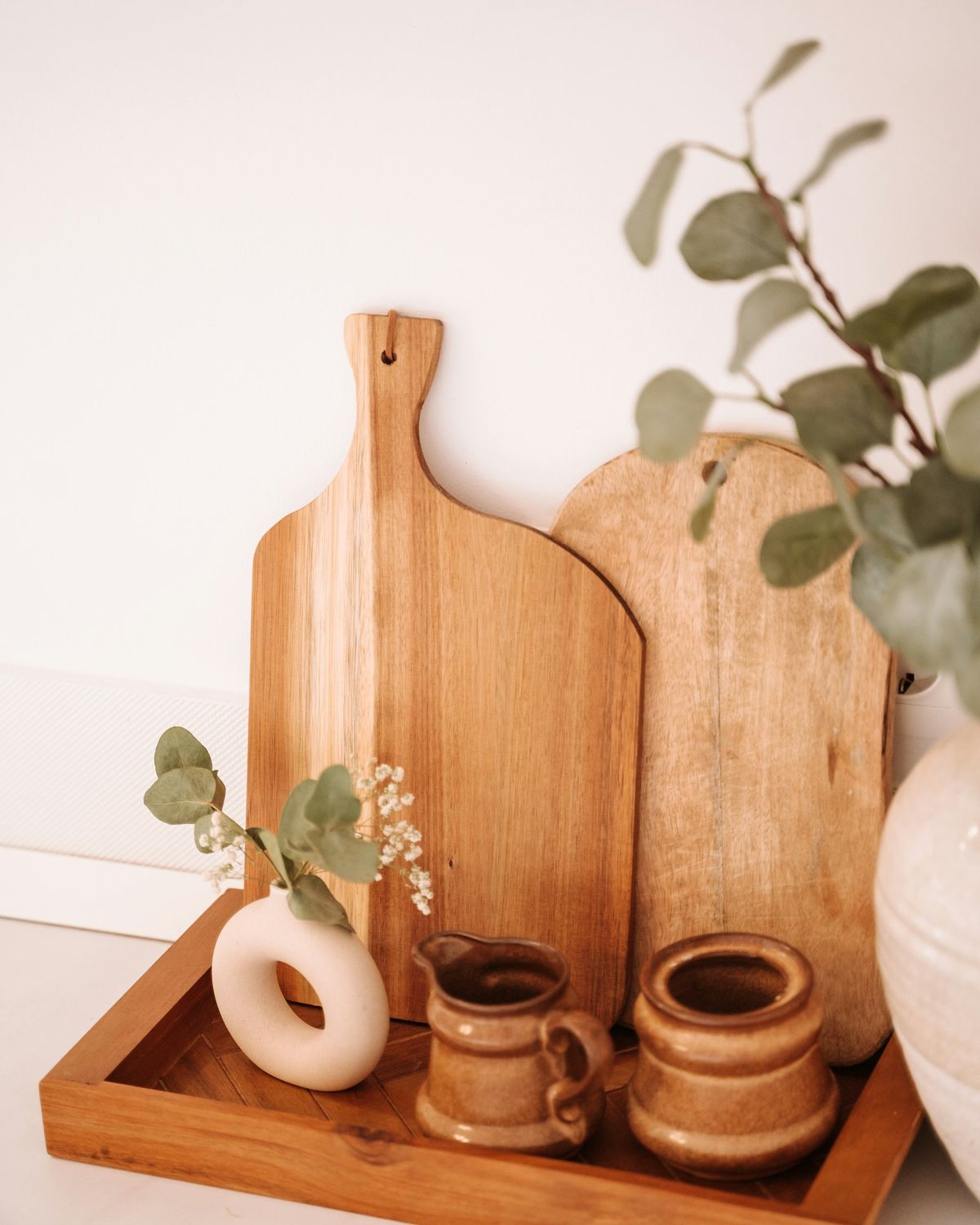
Ten small things on a counter look messy. The same ten on one tray look like a station, and you can lift the tray to wipe up drips.
Choose a tray that fits your counter depth with room to spare. Put only the morning essentials on it: sugar, spoons in a small cup, filters and one mug. Everything else lives in a cabinet. Wood and stoneware add warmth; plain metal is easiest to wipe.
Cost: Free (a cutting board or plate you own) to $ · Renter-friendly: Yes
Small-space trick: lean a cutting board or two behind the tray, as in the photo. It fills the blank backsplash and makes the corner look styled.
10. Store Coffee in Opaque, Airtight Canisters
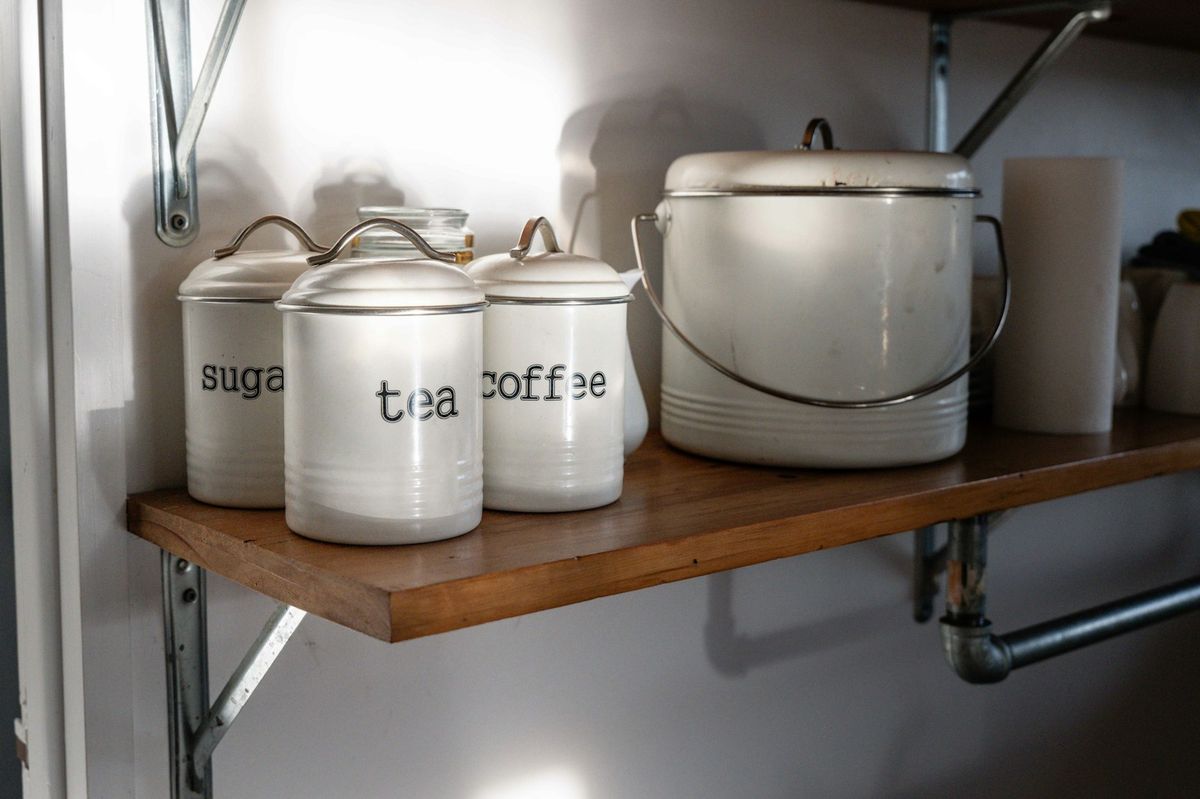
Matching canisters make a coffee bar look finished, and the right ones keep coffee tasting fresh.
The National Coffee Association recommends an airtight, opaque container, since clear canisters let in light that can affect the taste. Keep it away from the oven, the dishwasher and strong afternoon sun. Its chart says opened beans stored airtight stay fresh about 1 to 3 weeks at room temperature, and ground coffee 1 to 2, so a small canister you refill often beats a giant one.
Cost: $ to $$ · Renter-friendly: Yes
Budget tip: reuse a lidded ceramic jar you already own, and label plain canisters with a paint pen.
Power, Light and Finishing Touches
11. Tame the Cords and Respect the Outlet
Cords make a small coffee bar look cluttered, and with a kettle and brewer side by side, they need a safety check too.
The U.S. Fire Administration says to plug only one heat-producing appliance, such as a coffee maker or microwave, directly into a wall outlet at a time, and never to use an extension cord with one. So skip the power strip for the brewer and kettle, and if they share an outlet, plug in one at a time.
Keep cords out from under rugs, too. The CPSC has said that simply moving cords from under rugs could help prevent many house fires.
Cost: Free to $ · Renter-friendly: Yes, with adhesive cord clips
Renter tip: clip cords along the back of the counter, so nothing hangs over the edge to be pulled or snagged.
12. Add Warm Light Under the Shelf
Early coffee and late-night tea both look better under a soft glow than under the bright overhead light.
Battery or plug-in LED strip and puck lights stick under a shelf or cabinet with adhesive, no wiring needed, and battery versions leave the outlet free for the brewer. Choose warm white: the U.S. Department of Energy notes that warm light sits around 2,700K, the tone that suits wood and fabric at home.
Cost: $ · Renter-friendly: Yes, with the adhesive mounts they come with
Pro tip: pick lights with a remote or motion sensor, so you never reach over a hot kettle for a switch.
13. Bring In One Small Plant (Check It’s Pet-Safe)
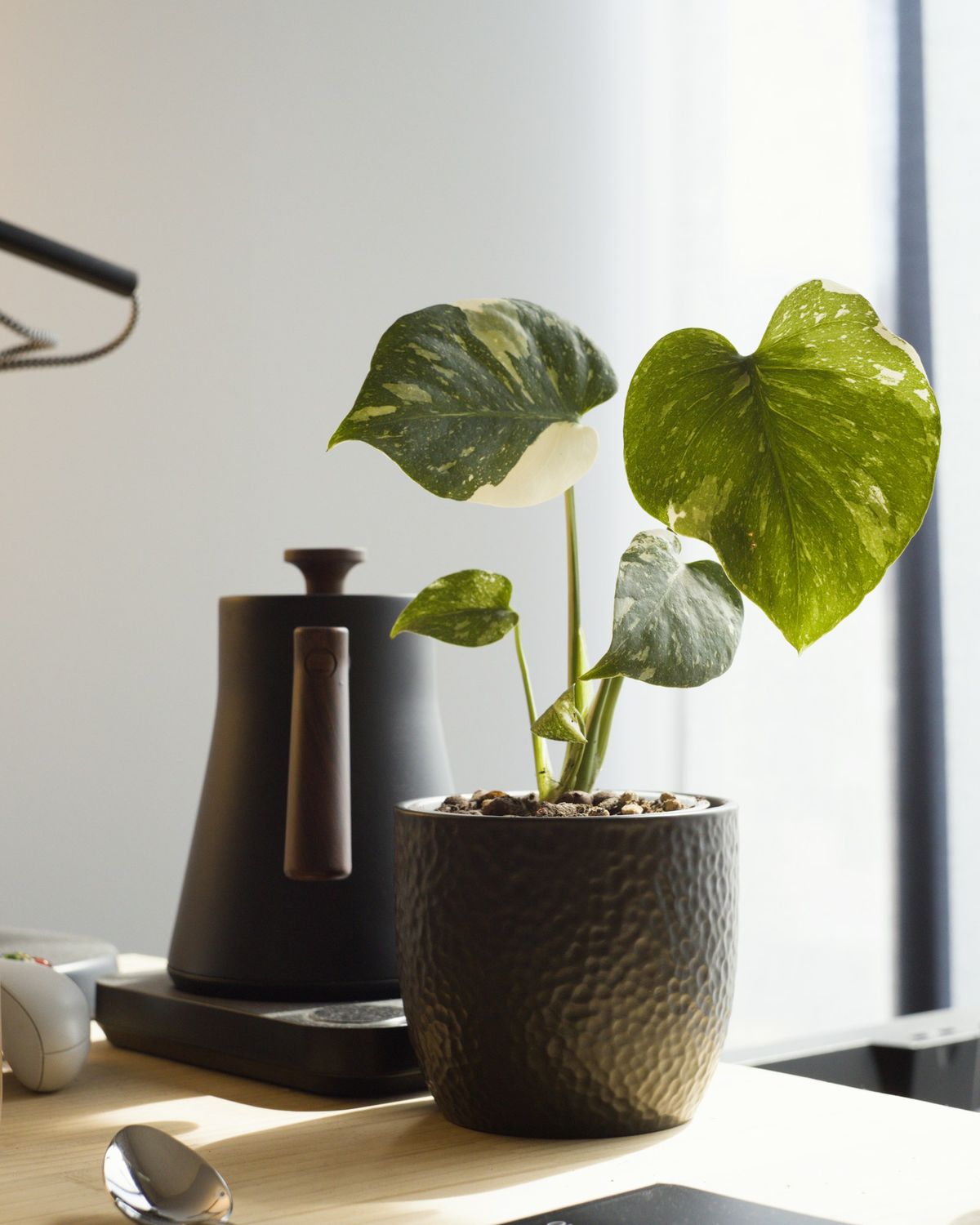
One green leaf softens the hard surfaces of a coffee station: metal, glass and ceramic. Keep it small and out of the way of steam.
Have cats or dogs? The ASPCA lists monstera, the plant in the photo, as toxic to both, while baby rubber plant (a peperomia) and parlor palm are non-toxic. Parlor palm also makes a University of Nebraska–Lincoln list of plants for low, indirect light. More in our indoor plant decor ideas.
Cost: $ · Renter-friendly: Yes
Budget tip: slip a small plant, still in its nursery pot, inside a spare mug. It matches the station and costs less than a planter.
14. Hang a Small Piece of Art or a Menu Sign
A small print above the station tells the eye this corner is a destination, not leftover counter.
Keep it light: a small framed print, a postcard in a clip frame or a hand-lettered menu of the drinks you actually make. Lean it against the backsplash, or hang it with removable adhesive picture strips, staying under the package’s weight limit. Keep paper art away from the kettle spout and the sink, where steam and drips can warp it.
Cost: Free to $ · Renter-friendly: Yes, leaning or with removable strips
DIY it: write your house drinks on a small chalkboard, or frame a pretty paper napkin in a thrifted frame.
Coffee Bar Ideas for Small Spaces: Quick Size and Safety Guide
| What | Rule of thumb | Source |
|---|---|---|
| Counter to upper cabinets | Standard gap is 18 inches; measure yours before buying a machine | Bob Vila |
| Where to brew | In a well-ventilated spot, not under a cabinet | Two coffee maker manuals |
| Heat appliances | One at a time per wall outlet, plugged in directly; no extension cords | U.S. Fire Administration |
| Cords | Never under rugs | CPSC |
| Coffee storage | Airtight, opaque container away from the oven, dishwasher and afternoon sun | National Coffee Association |
| Freshness after opening | Beans about 1–3 weeks, ground about 1–2 weeks, airtight at room temperature | National Coffee Association |
| Warm light | Around 2,700K | U.S. Department of Energy |
| Pet-safe plants | Parlor palm and baby rubber plant are non-toxic; monstera is toxic | ASPCA |
Start Here: 3 Ideas for Any Budget
- Free: claim one counter corner (#1). Gathering the coffee gear in one spot costs nothing, and every other idea builds on it.
- Under $50: a tray plus opaque canisters (#9 and #10). The station looks finished, and the coffee stays fresher.
- Under $150: a rolling cart (#2). It turns an unused gap into a whole coffee bar, and it moves with you.
FAQ
How do I set up a coffee bar in a small apartment?
Pick one spot near an outlet, like a counter corner, a cart or a narrow console, and keep only daily items there on one tray. Store beans in an opaque, airtight canister, display a few mugs and keep extras in a cabinet.
Can I make a coffee bar in a rental without drilling?
Yes. A cart or console, a tray, canisters, a leaning pegboard, slide-on mug hooks or a mug tree, and adhesive LED lights all work without holes. Ask your landlord before you mount a shelf, ledge or rail.
How much does a small coffee bar cost?
It can cost nothing if you use a counter corner and things you own. Most single upgrades here fall in our $ (under $25) or $$ ($25–100) tiers, and a cart is usually $$.
Is it safe to plug a coffee maker into a power strip?
Not according to fire safety guidance. The U.S. Fire Administration advises plugging only one heat-producing appliance, like a coffee maker, directly into a wall outlet at a time, with no extension cord. Your machine’s manual may add its own cord and circuit rules.
Where should I keep coffee beans on a coffee bar?
In an airtight, opaque canister, away from the oven, the dishwasher and strong afternoon sun, according to the National Coffee Association. Clear jars look nice but let in light.


