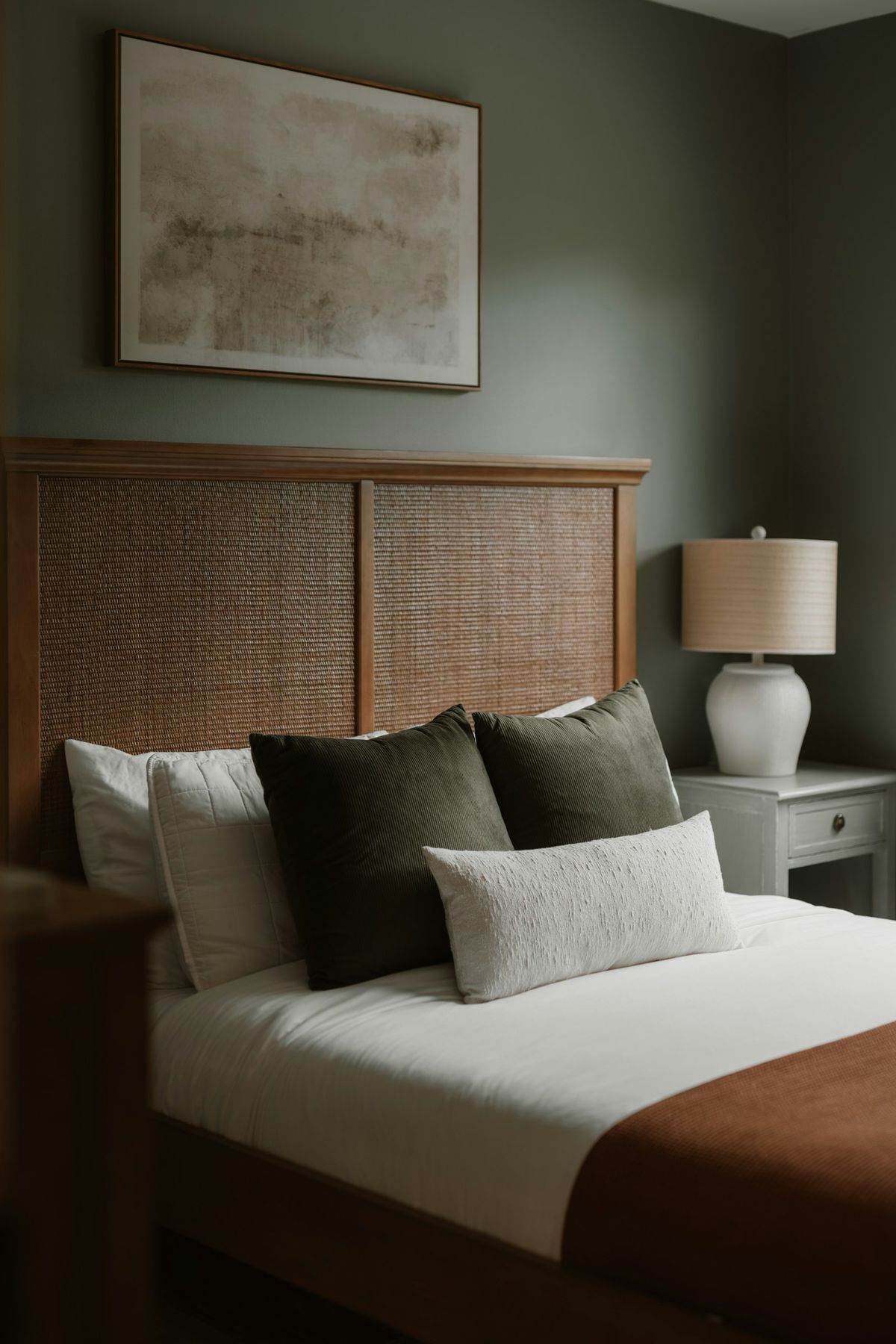
Want a calmer bedroom but can’t paint, can’t drill and don’t want to spend much? Green is one of the easiest colors to bring in without touching a wall.
These green bedroom ideas are built for small, rented rooms. Each comes with a cost tier and a renter-friendly answer, and twelve of the fifteen need no landlord approval. Expect sage, olive, eucalyptus and forest green, plus the wood, terracotta and warm light that keep green cozy.
We grouped the ideas into four goals, then added a shade table to help you pick your green.
Quick take
- Biggest change for the least money: green pillow covers plus warm 2,700K bulbs (#2 and #11).
- Renter-safe picks that need no landlord OK: #1, #2, #4, #5, #8 to #15.
- Can’t decide on a shade? Sage is the easiest to live with; forest green works in small doses.
- Warm it up: green looks coziest next to wood, terracotta and warm white light (#9 to #11).
Get Green Without Paint
1. Start With Green Bedding
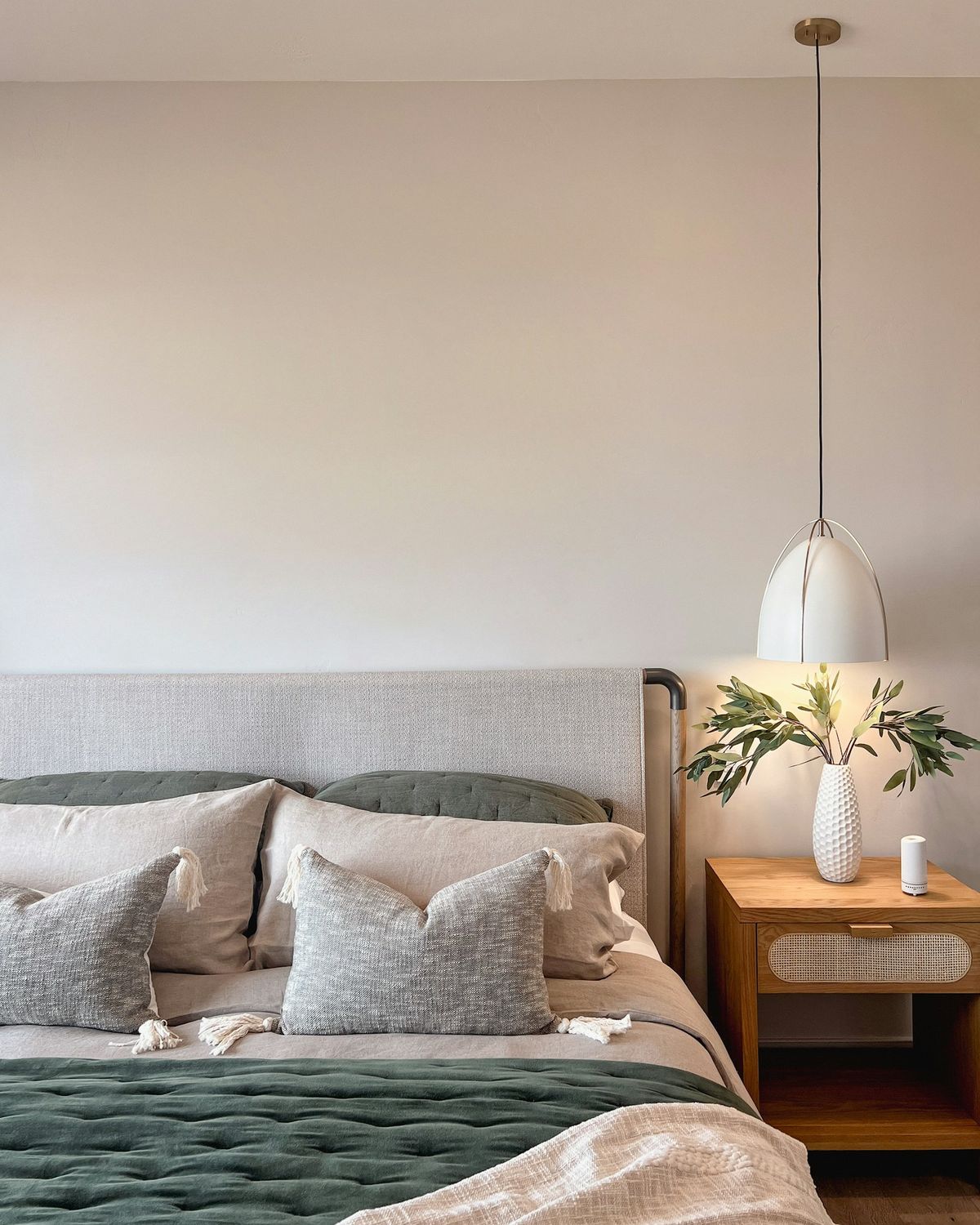
In a small bedroom the bed covers more area than anything else you own, so it sets the color of the room. Green bedding changes the whole mood without a single tool.
Choose one piece in your green: a duvet cover, a quilt or a coverlet. Keep the sheets and sleeping pillows in white or oatmeal so the green reads as deliberate, not heavy. Sage and eucalyptus suit a full duvet; deeper olive or forest green often looks richer as a quilt folded over the bottom half of the bed.
Cost: $$ · Renter-friendly: Yes
Budget tip: buy just the duvet cover and keep your current insert. A cover usually costs less than a new comforter.
2. Swap Pillow Covers and Add a Green Throw
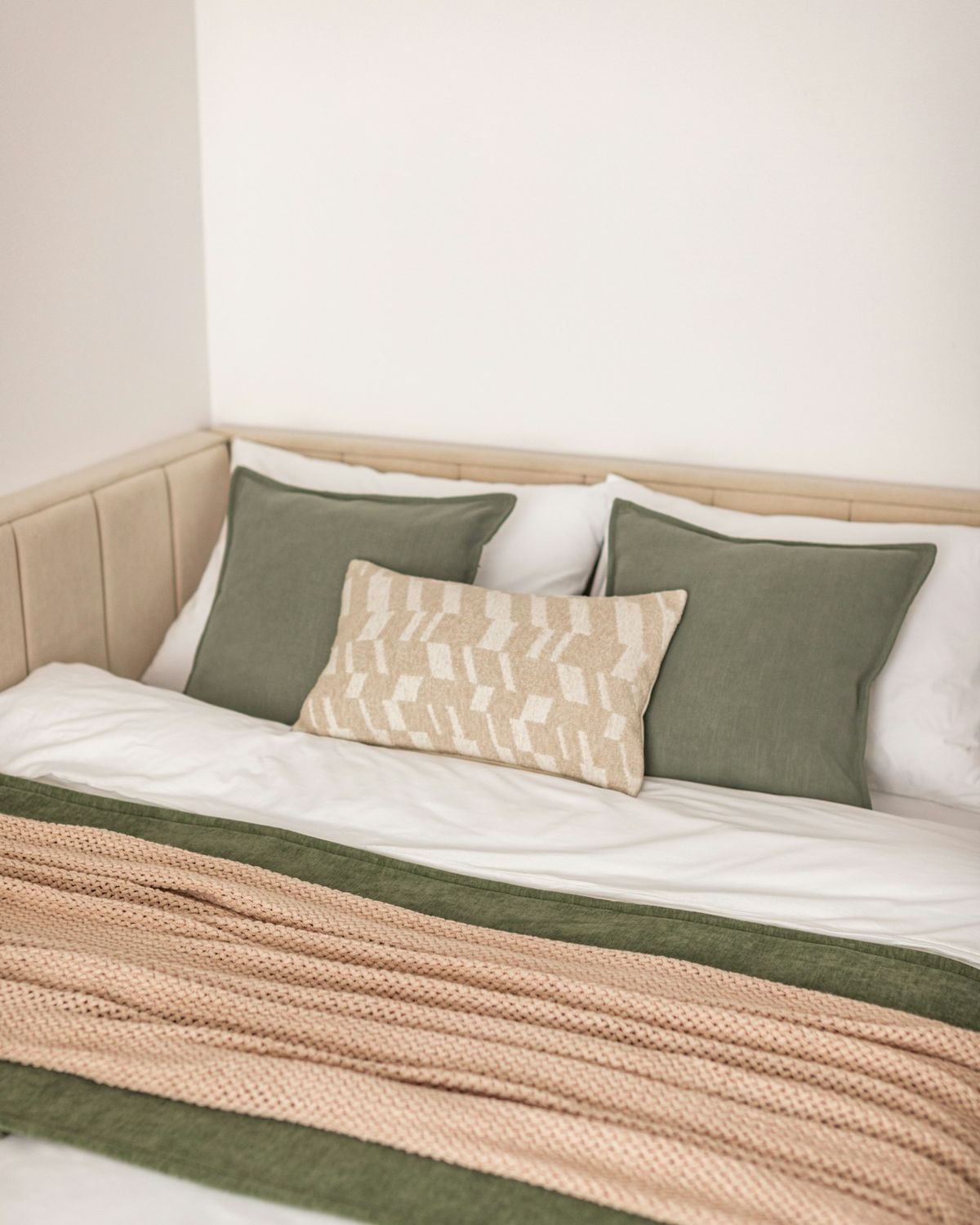
Pillows and a throw are the smallest way to test a green before you commit to more. If you tire of the shade, the change costs little to undo.
Two green pillow covers and one textured lumbar in cream or blush are plenty for a full or queen bed. Add a throw in a second green, or one that mixes green with a warm color, folded across the foot of the bed. Check the insert size before you order covers.
Cost: $ · Renter-friendly: Yes
Small-space trick: repeat the throw’s green once more across the room, in a book stack or a small vase, so the color looks planned.
3. Hang Green Curtains, High and Wide
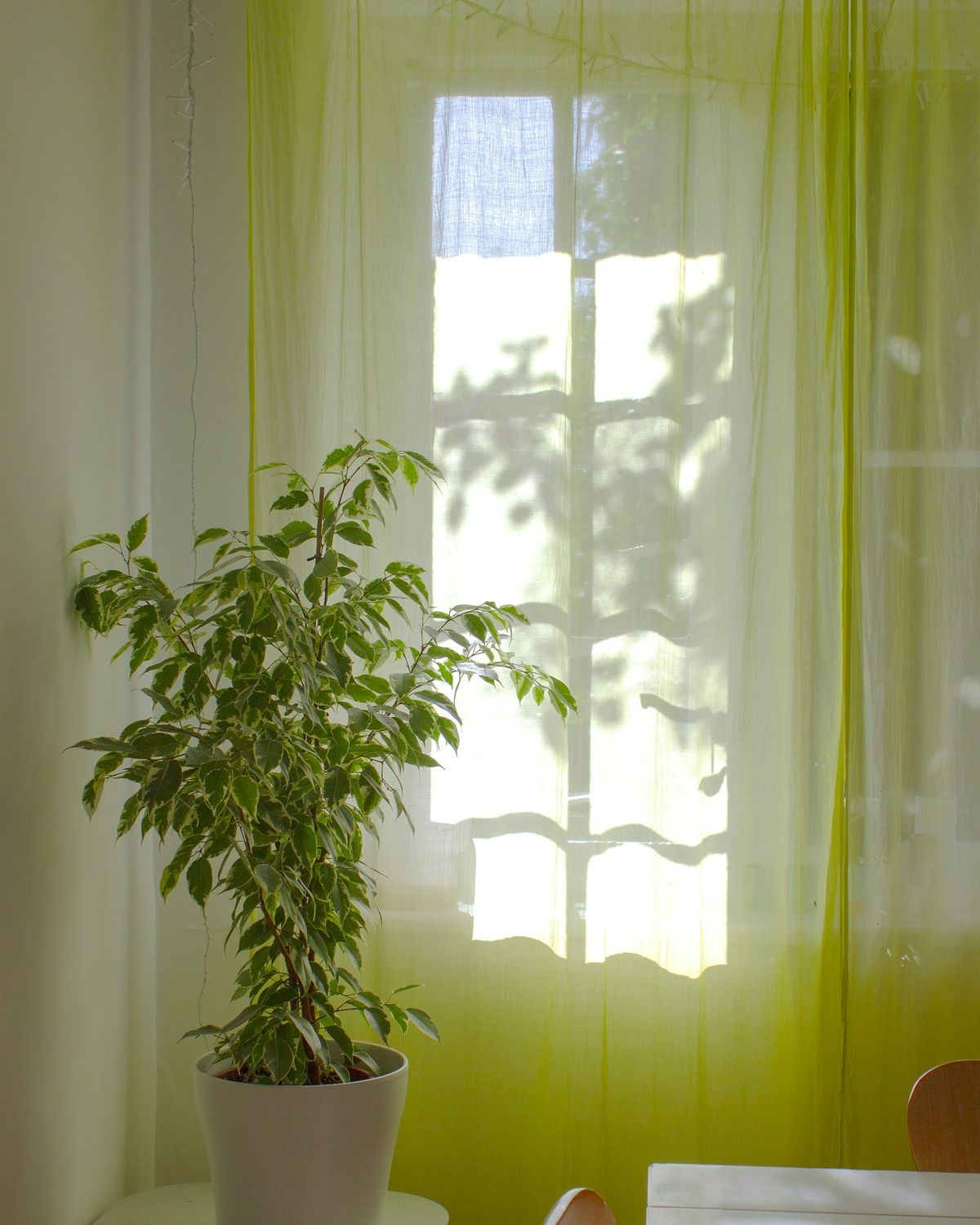
Curtains cover a lot of wall, which makes them the closest thing to paint you can take with you when you move. Sheer green panels tint the daylight; heavier ones in olive or forest add weight and warmth at night.
Wayfair’s curtain guide puts the rod 4 to 6 inches above the window frame, or 6 to 12 inches above it to make a room feel taller. It also suggests curtains 1.5 to 3 times the window’s width for full coverage.
Cost: $ to $$ · Renter-friendly: Ask your landlord about rod brackets, since they need screws. A tension rod inside the frame needs no holes but sits lower.
Renter tip: if the landlord already installed a rod, use it. Swapping only the panels is the cheapest green you’ll find.
4. Ground It With a Natural Rug

A green room needs something earthy underfoot. Jute, wool or a rug in oatmeal and rust keeps green from feeling flat and gives bare feet a warm landing.
Size matters more than pattern. Wayfair’s rug guide suggests a rug that extends 18 to 24 inches past the sides and foot of the bed, which is usually an 8′ x 10′ for a queen. It also lists runners beside the bed as a flexible option for any bed size, including a bed with two sides against a wall.
Cost: $$ to $$$ · Renter-friendly: Yes
Skip it if: your floor is already wall-to-wall carpet in a busy color. Add a single runner on your side of the bed instead.
5. Add a Green Headboard (No Drilling)

A headboard gives the bed a focal point and puts color right at eye level, where you see it every time you walk in.
Look for an upholstered headboard that bolts to the bed frame or stands on its own legs, so nothing touches the wall. Velvet in olive or forest green looks rich and catches lamp light. For a near-free version, hang a green blanket or fabric panel from a tension rod wedged between two walls behind a bed in an alcove.
Cost: $ (DIY fabric) to $$$ · Renter-friendly: Yes, bolted to the frame or freestanding
Good to know: measure from the floor to the top of your mattress before you shop, since headboard leg heights vary.
Bigger Green Moves (Check Your Lease First)
6. Try Peel-and-Stick on One Small Area
Removable wallpaper in a leafy pattern or a solid sage can turn one short wall into a feature. Keep it small: removal is the risky part.
Start with an easy spot, like the wall behind the headboard or the back panel of a bookcase. In Homes & Gardens, a wallpaper maker warns that freshly primed or painted walls need at least 30 days before installation. It also advises against washable or scrubbable paint, which may not let the adhesive bond well.
Cost: $ to $$ · Renter-friendly: Ask your landlord, and test a hidden patch first
DIY it: cover the back of a cheap bookcase instead of a wall. You get the same pop of green with zero risk to the paint.
7. Paint a Half Wall or One Wall (With the Landlord’s OK)
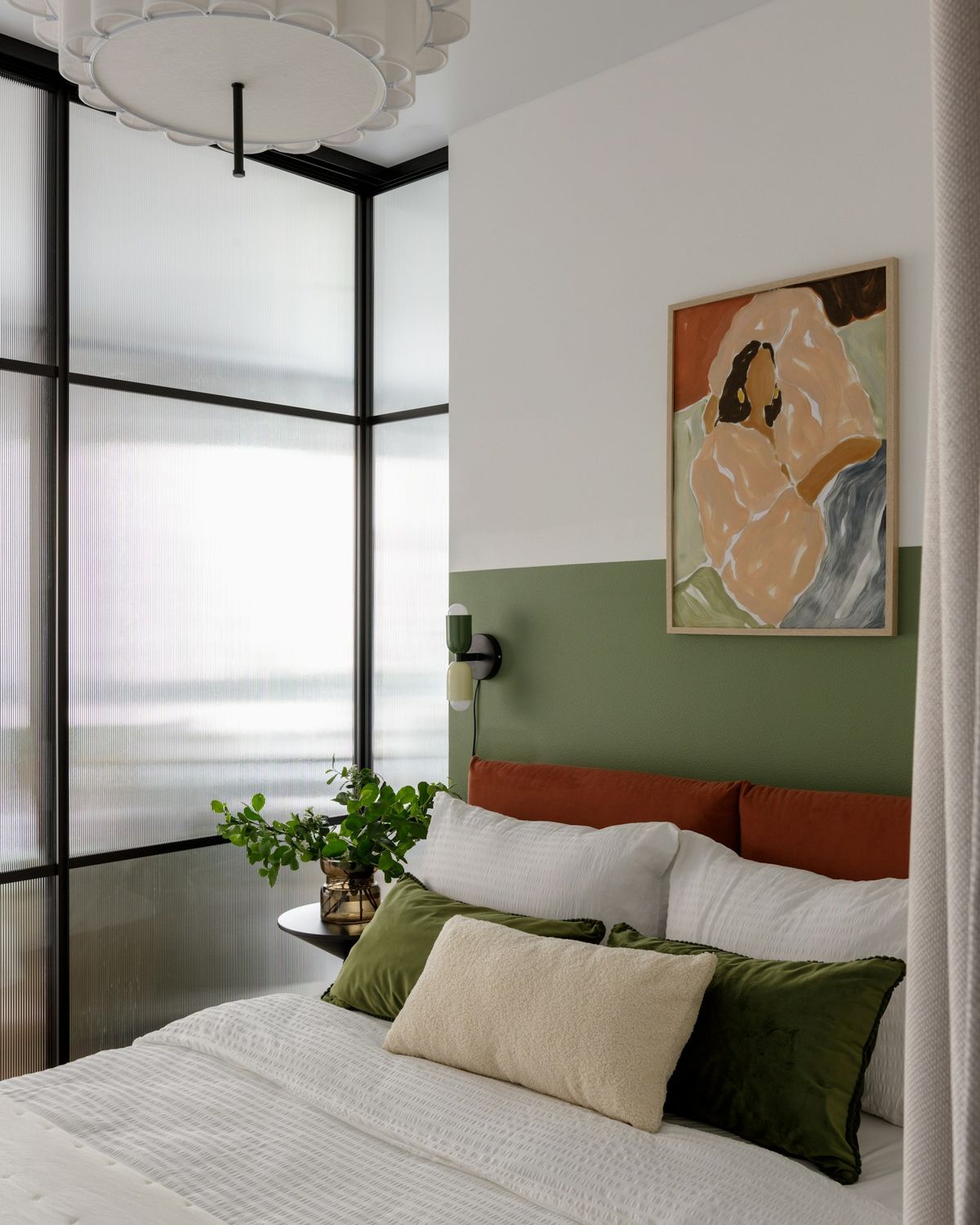
If your lease allows it, one wall of green does more than a whole room of accessories. Painting only the lower half, or the wall behind the bed, keeps the job small and easy to reverse.
Get the landlord’s OK in writing first, including whether you must repaint before you move out. Test two or three sample patches and look at them morning and night. Open the windows while you work: the EPA lists paints among household sources of VOCs and advises more ventilation when you use them. Buy only what you need.
Cost: $ · Renter-friendly: Ask your landlord
Pro tip: a half wall looks crisp when the line sits just above the top of the headboard. Mark it with a level and painter’s tape.
8. Paint a Thrifted Nightstand Green
You can paint furniture you own without asking anyone. A green nightstand or small dresser works like a mini accent wall that moves with you.
Look for solid wood pieces at thrift stores and yard sales. Clean, sand lightly and prime, then let the paint dry fully before you set a lamp on top. Skip sanding old, chipping paint: the EPA lists refinishing old furniture among activities that can expose you to lead. Deep forest or olive on a small piece looks rich; a whole dresser in sage reads softer.
Cost: $ · Renter-friendly: Yes, it’s your furniture
Budget tip: new knobs in brass or wood finish the look for a few dollars, and you can keep the old ones for a future swap.
Keep Green Warm: Wood, Terracotta and Light
9. Pair Green With Warm Wood

Green and wood go together because you see them together outdoors. Wood adds warmth that cooler greens like sage and eucalyptus can lack.
Shop your home first: a wooden stool as a nightstand, a wood picture frame, a tray or a cutting board leaned on the dresser all count. Mid-tone woods like oak and walnut warm up pale greens; lighter woods keep deep forest green from feeling heavy.
Cost: Free (move what you own) to $$ · Renter-friendly: Yes
Best for: rooms with gray carpet or white furniture that feel a little cold.
10. Add Terracotta and Rust Accents
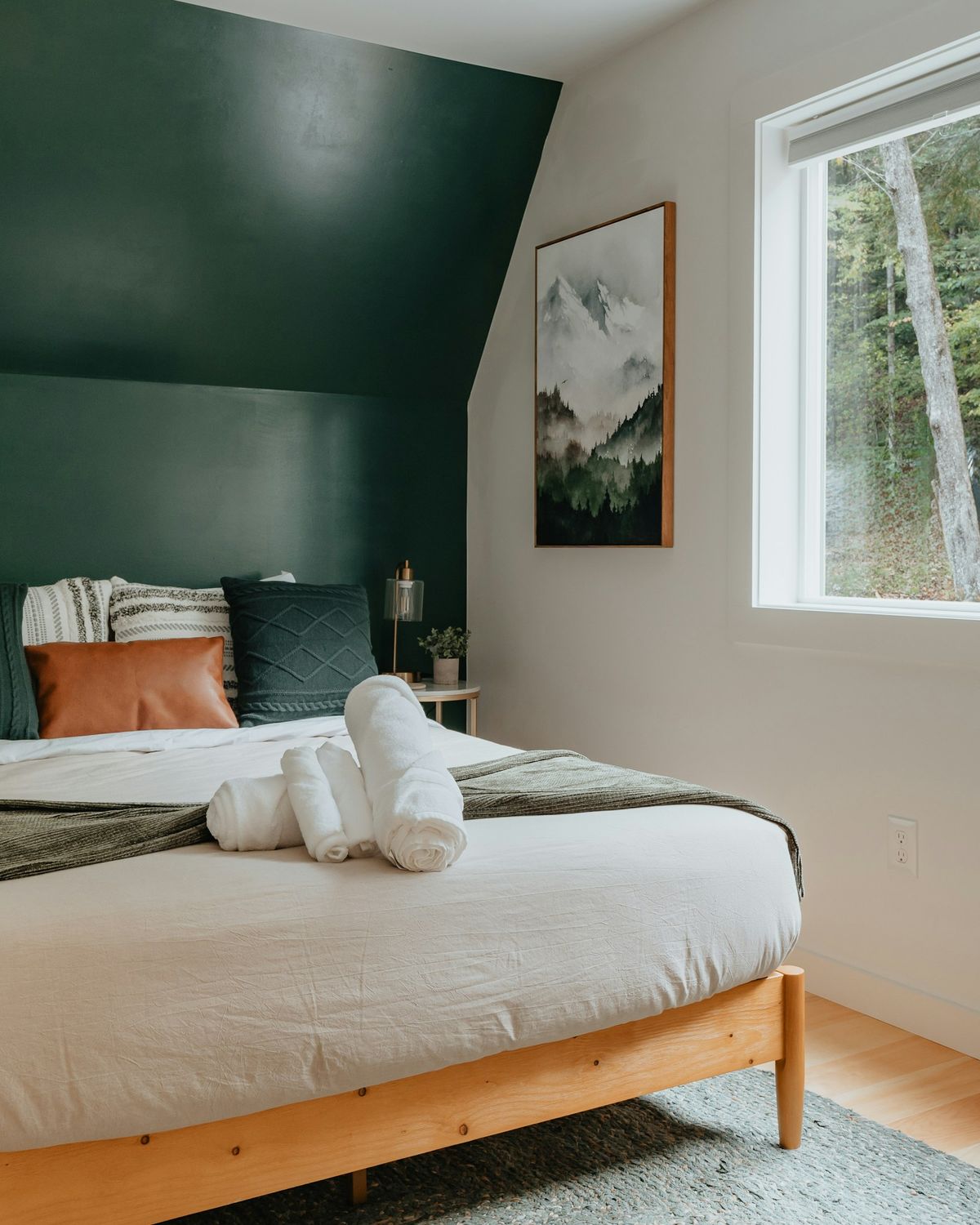
Terracotta is a warm red-orange, close to green’s opposite on the color wheel, so a little of it makes green look richer. Rust, clay and burnt orange are the warm partners that turn a green room cozy.
Keep the warm color to small pieces: one pillow, a clay pot, a throw or a lamp base. Olive and forest green handle bold rust; sage looks softer next to a dusty terracotta or blush.
Cost: $ · Renter-friendly: Yes
Renter tip: clay pots and planters are some of the cheapest terracotta you can buy, and they double as a home for a plant (#13).
11. Use Warm Bulbs So Green Doesn’t Turn Gray

The same green can look cozy or cold depending on the bulb. Cool, bluish light pulls sage and eucalyptus toward gray; warm light brings out the yellow in olive and softens forest green.
The U.S. Department of Energy lists 2,700K as warm light and 3,000K as soft light, both suited to homes, while 4,100K is cool light for offices. It also notes that ENERGY STAR bulbs must score 80 or higher on the color rendering index (CRI), a 0 to 100 measure of how true colors look. Check both numbers on the box.
Cost: $ · Renter-friendly: Yes
Good to know: keep every bulb in the room at the same color temperature. A mix of warm and cool light makes the walls look patchy.
12. Mix Textures: Linen, Velvet and Knit

One flat green fabric can look like a uniform. Two or three textures in similar greens look layered and lived-in.
Pair washed linen sheets with a velvet pillow and a chunky knit throw. Matte fabrics make green look soft; velvet and sateen catch light and look deeper. In a small room, keep the colors close and let the textures do the work.
Cost: $ to $$ · Renter-friendly: Yes
Small-space trick: put the heaviest texture lowest, like a knit throw at the foot of the bed, so the top half of the room stays light.
Living Green: Plants, Stems and Art
13. Bring In Real Plants (Pet-Safe If You Have Pets)
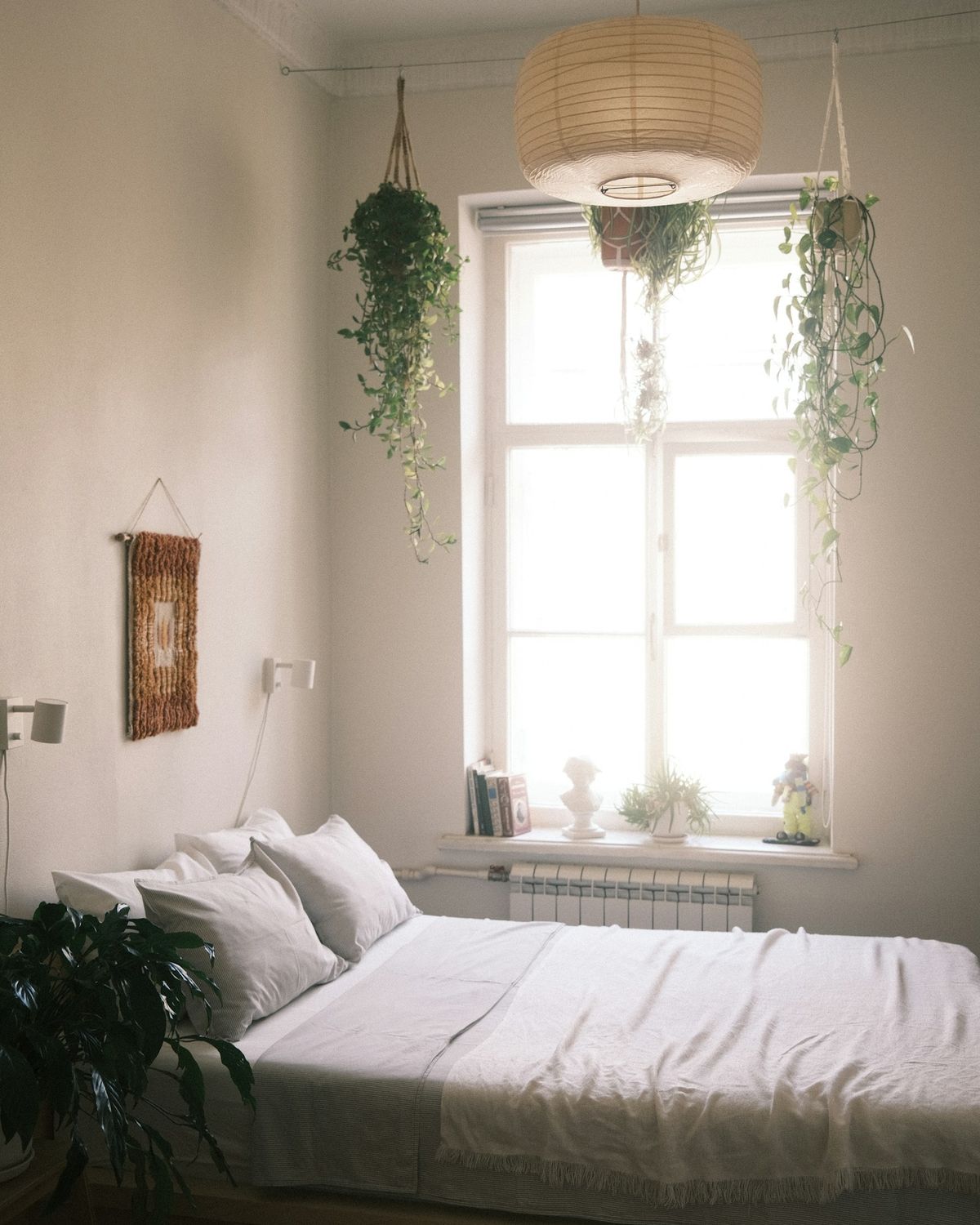
Nothing makes a green room feel alive like real leaves. One or two healthy plants near the window add more than a crowd of struggling ones.
If you have cats or dogs, check every plant first. The ASPCA lists spider plant, parlor palm, Boston fern and prayer plant as non-toxic to both, while golden pothos and snake plant are listed as toxic. For more, see our indoor plant decor ideas.
Cost: $ · Renter-friendly: Yes. Ceiling hooks need your landlord’s OK.
Pro tip: a hanging planter on the curtain rod or a tall plant stand keeps leaves off the nightstand and away from curious pets.
14. Put a Few Stems in a Vase

A single branch in a vase adds height and a soft green shape with almost no space. Eucalyptus is the classic pick, and its gray-green leaves match the shade that shares its name.
Use one tall stem in a narrow vase, or three short ones in a bud vase on the dresser. Keep real eucalyptus out of reach of pets: the ASPCA lists eucalyptus as toxic to dogs, cats and horses. Faux stems give the same look with no risk.
Cost: Free to $ · Renter-friendly: Yes
DIY it: cut a few branches from your own yard or ask a florist for leftover greenery, then let them dry right in the vase.
15. Hang Botanical Art Without Holes

Art lets you add green to the walls when paint is off the table. Leafy prints, pressed ferns or a framed piece of green fabric all tie the room together.
Lean one large frame on the headboard or dresser, or hang light frames with removable picture-hanging strips. Check the weight limit on the package and test the strips on a hidden spot first. Pick art that repeats one green from your bedding or curtains.
Cost: $ to $$ · Renter-friendly: Yes, with removable strips
Budget tip: press real ferns or leaves between heavy books for a week, then frame them on plain paper.
Green Bedroom Ideas by Shade: Pick Your Green
Every green leans warm or cool. Match a shade to your room, then start with the no-paint option.
| Shade | How it feels | Pairs well with | Easiest no-paint way to try it |
|---|---|---|---|
| Sage | Soft, gray-green, calm | Cream, oatmeal linen, light oak, blush, dusty terracotta | A duvet cover or sheet set |
| Olive | Earthy, yellow-leaning, warm | Rust, mustard, walnut, brass, cream | Velvet pillow covers or a headboard |
| Eucalyptus | Cool, blue-gray green, airy | White, pale wood, natural linen, warm white bulbs | Curtains or a few stems in a vase |
| Forest | Deep, dramatic, cocooning | Camel, cognac, brass, crisp white bedding | A quilt at the foot of the bed or one painted nightstand |
Start Here: 3 Ideas for Any Budget
- Free: pair green with wood you already own (#9). Move a wooden stool, tray or frame into the bedroom and any green you add later will look warmer.
- Under $50: two green pillow covers and warm bulbs (#2 and #11). Color plus a warm glow, and both move with you.
- Under $150: a green duvet cover or quilt (#1). The bed is the biggest surface in the room, so it gives you the most green for the money.
FAQ
What colors go with sage green in a bedroom?
Warm neutrals and soft warm colors. Cream, oatmeal, light oak and natural linen keep sage calm, while blush and dusty terracotta add warmth. Brass or wood accents stop it from looking gray.
Is green a good color for a small bedroom?
Yes, if you match the shade to the job. Light greens like sage keep a small room feeling open, and deep greens like forest work in small doses, such as one wall, a headboard or a quilt.
How can I add green to a rented bedroom without painting?
Use things that come with you when you move: green bedding, pillow covers, curtains, a freestanding headboard, plants and art hung with removable strips. Ask your landlord before you paint or use peel-and-stick wallpaper.
How much does a green bedroom makeover cost?
It can cost almost nothing or a few hundred dollars. Pillow covers, bulbs and stems sit in the under-$25 tier, a duvet cover or curtains in the $25–100 tier, and a headboard or large rug can run $100–300.


